SNIFFO

Social media is flooded with bots, AI-generated content, and misinformation — Sniffo helps you see through it. Scan any post or account and get instant alerts on misinformation, AI-generated content, and account-level risks. Stay informed, stay skeptical, and never get played by what's in your feed.
Project
ArtCenter College of Design Course (Data Visualization).
Deliverables
Prototype, wireframes, data visualization explorations, marketing reel.
Design skills
Interactive prototyping, Wireframe, Data visualization, UX
Video skills
Script writing, Directing, Editing
Core flow
To communicate Sniffo’s value clearly within a limited timeline, we focused on two primary use cases:
fast credibility checks during scrolling and deeper post investigation during longer sessions.
Scroll with Confidence
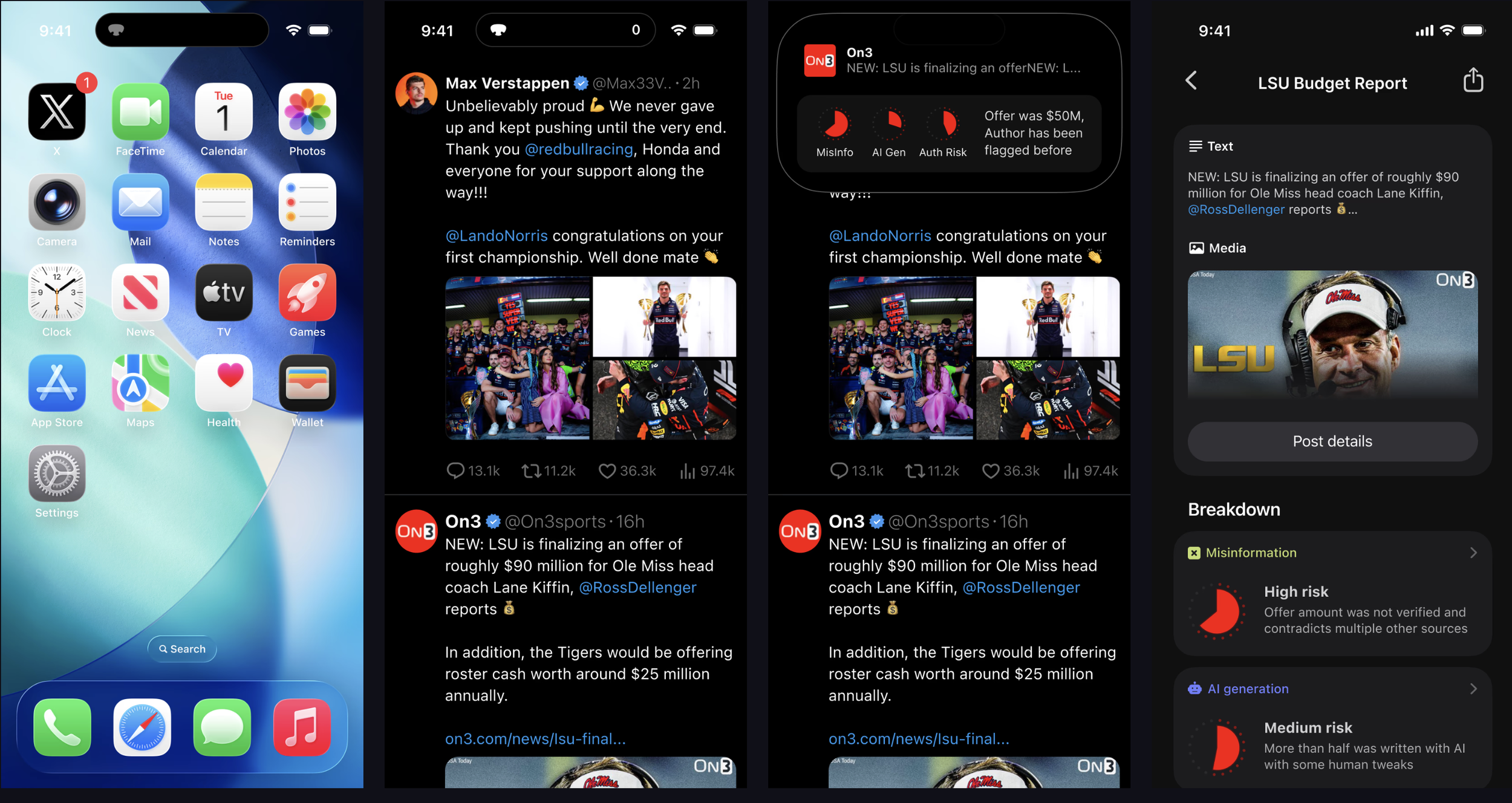
When users are scrolling quickly, they need lightweight signals that help them spot potential misinformation without disrupting the flow. Sniffo supports this moment through subtle alerts and real-time credibility cues.

01
Dive Deeper with Clarity
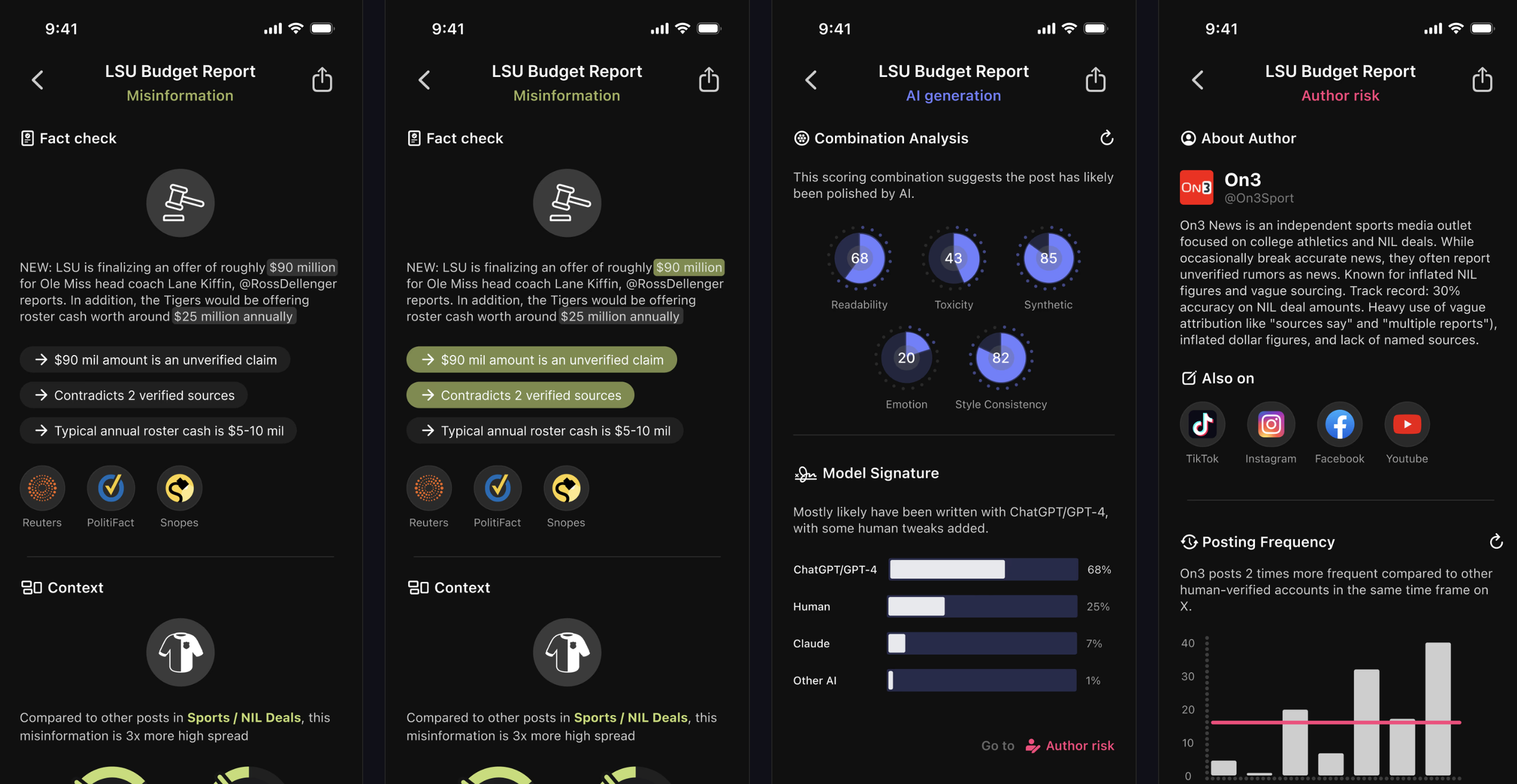
When a post feels questionable, users need more than a warning need context. Sniffo helps users dig deeper through layered analysis, combining misinformation signals, AI-generated content detection, and account-level risk patterns.

01
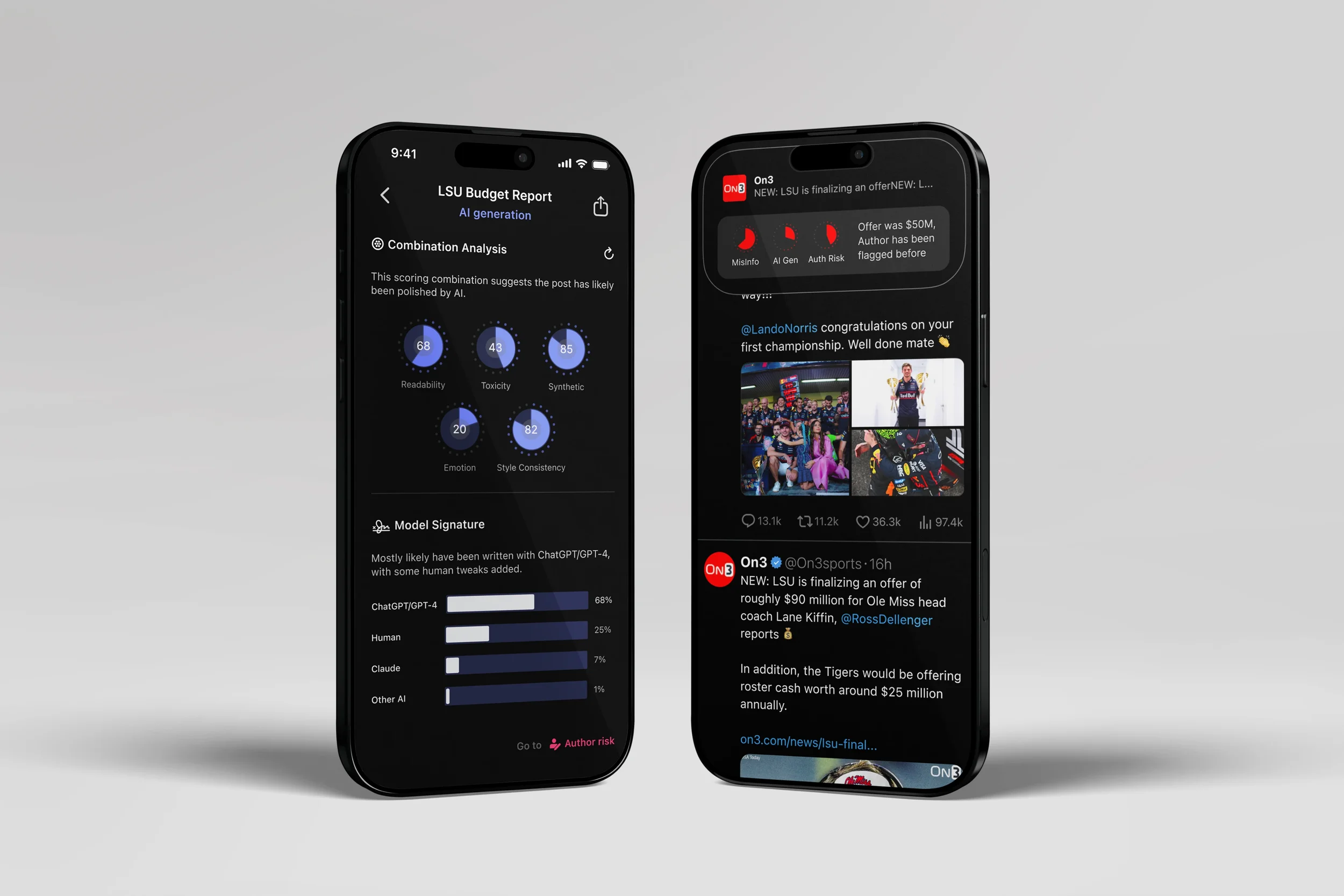
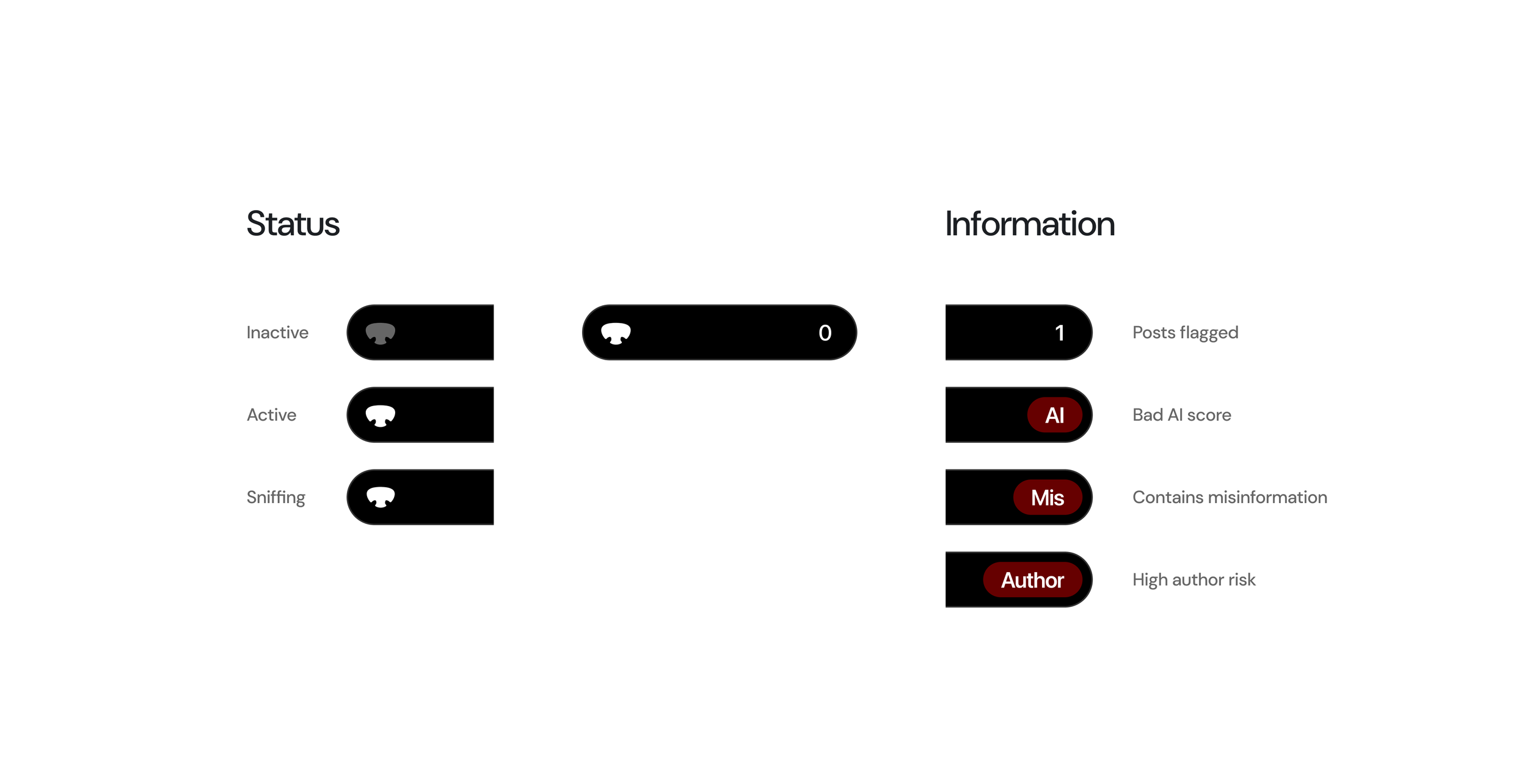
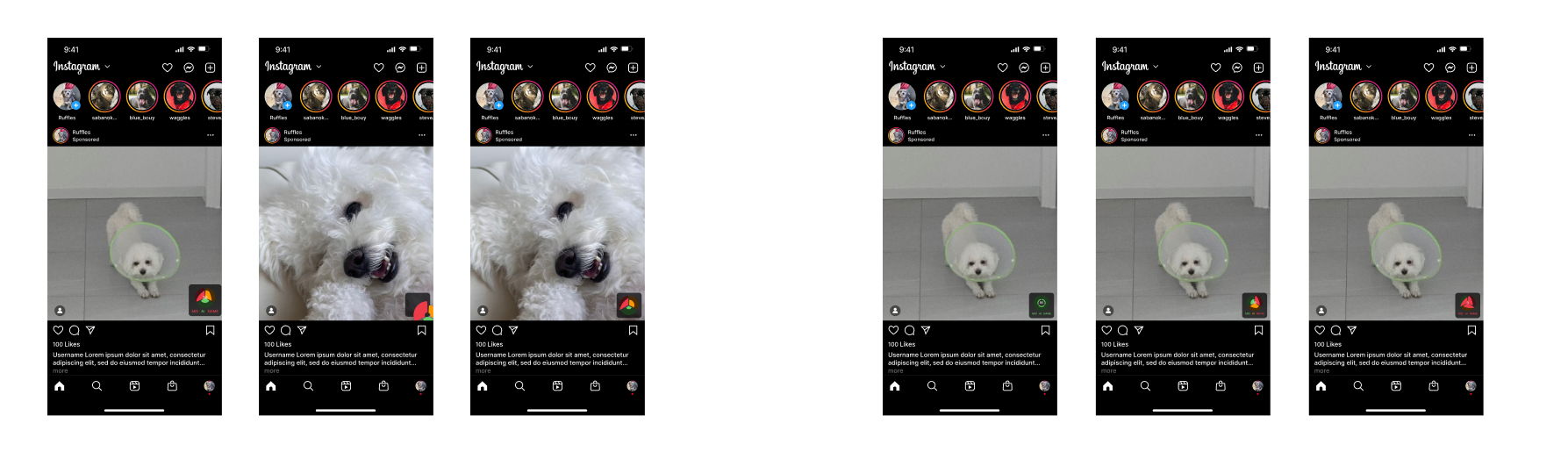
Sniffo scans and alerts during scroll through dynamic island.
02
Sniffo's in-app interactive report on post's misinformation.
03
Sniffo's interactive analysis on post's AI generated content.
UI Highlights
04
Sniffo analyzes account risk based on past posting behavior.
02
Integrated without disrupting the scrolling experience
Designed to keep cognitive effort minimal
Intuitive enough to require almost no learning
Supports quick choice: continue browsing or jump to the detailed report in the Sniffo app
Saves all “sniffing” results automatically within the Sniffo app
Process
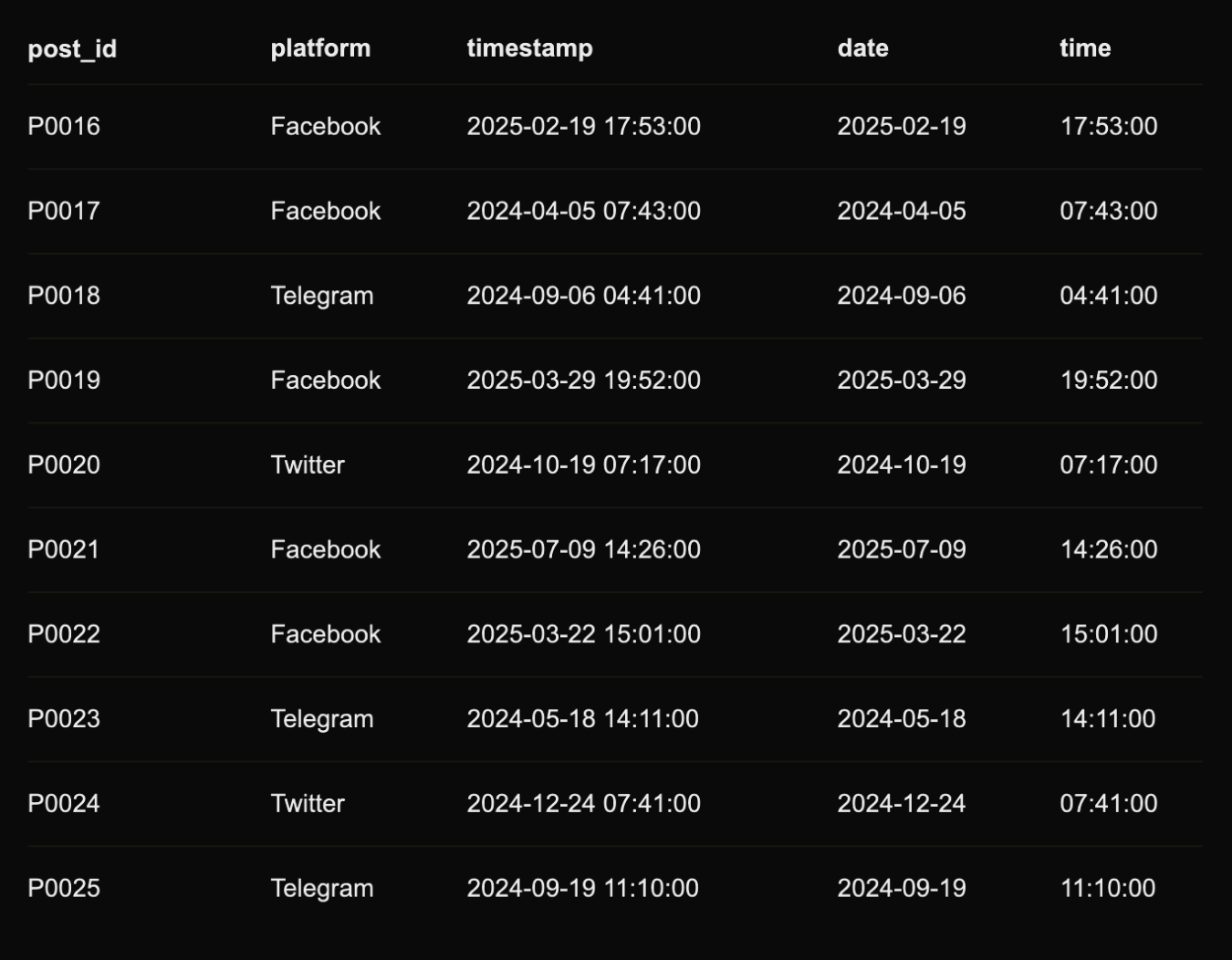
We started with a dataset of news articles and social media posts from 2024–2025, annotated with potential AI-generated misinformation.
Designing for Awareness in Flow
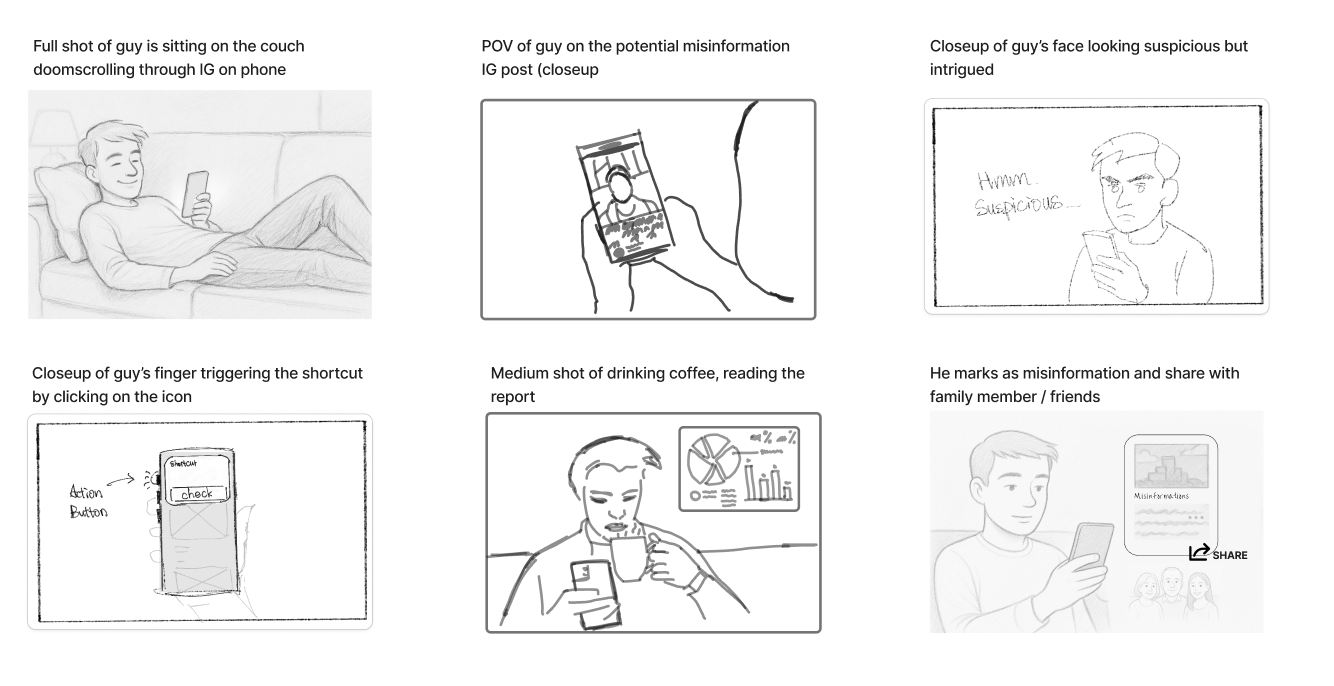
We first ideated different ways we could expand and visualize this dataset. The team was particularly excited by the idea of a social media detection tool.
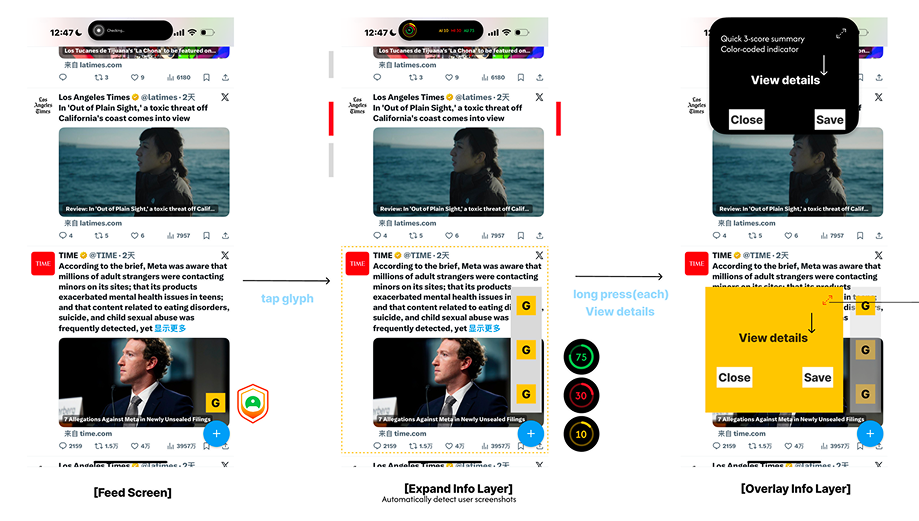
While the user scrolls, the system continuously analyzes content in the background —
only surfacing signals when something requires attention.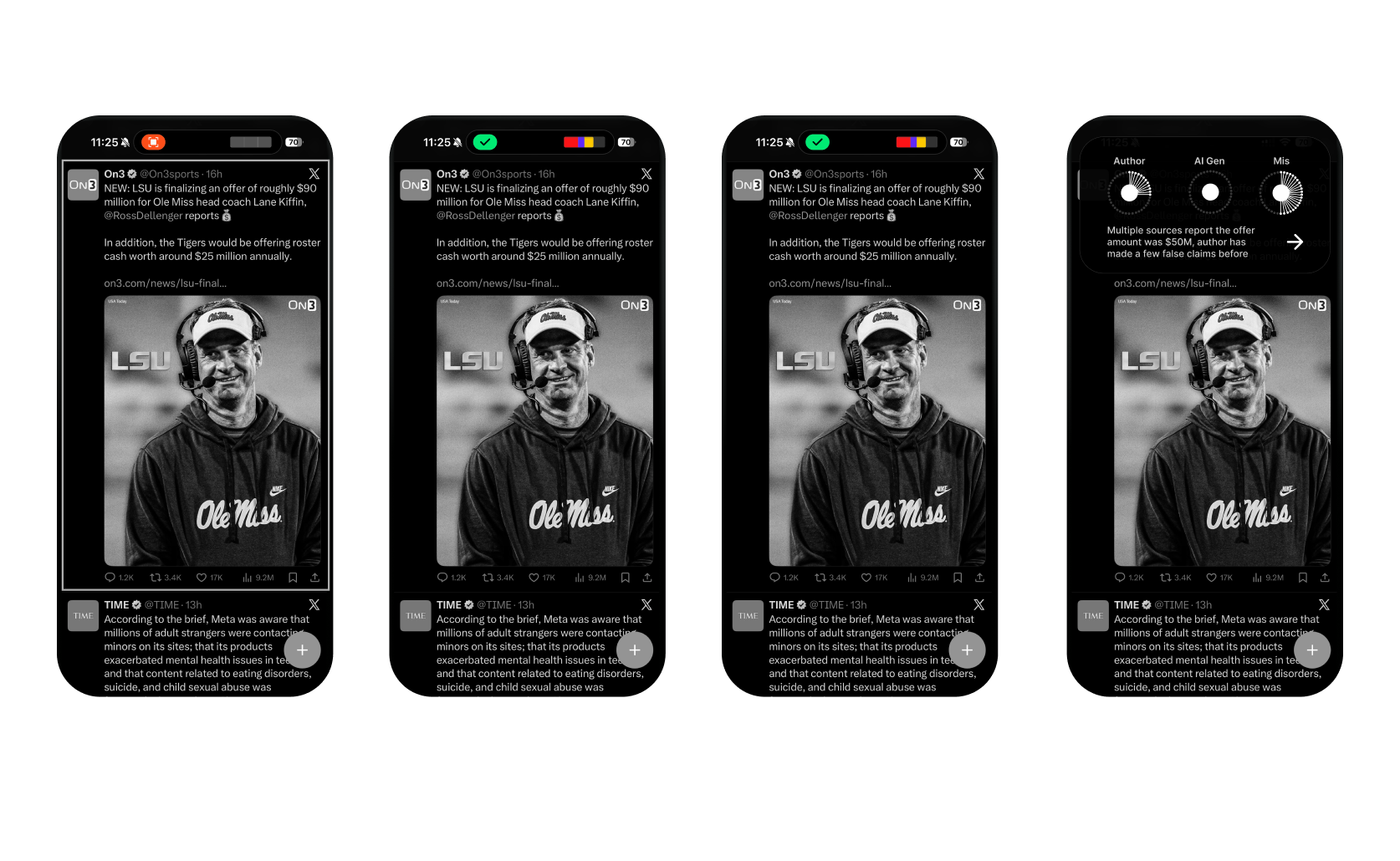
"We accidentally digest and spread misinformation more often than we realize on social media"
“70% of people don’t verify before sharing...”



03
However, this approach revealed a limitation:
data visualization happens after the fact.
credibility signals are invisible in everyday scrolling
Users consume information rapidly, without tools to assess risk, authorship, or AI involvement.
So instead of building a traditional data visualization,
I focused on designing a system that surfaces these signals in real time :
without interrupting the browsing experience.
Limited Time
People are less likely do extended research of social media posts on their phone
Pulled out of Flow
Unintuitive to switch between platforms and headspace
Limited Education on a Timely Issue
Most everyday people in the US are not well equipped to spot misinformation or AI on social media
As we fleshed out the look, feel, functionalities and features, we tried solving 3 big questions
How can the detection tool fit seamlessly into the established interaction pattern and mental model of casual and doom scrolling?
How can we integrate branding so this highly technical and cold tool become something an everyday user can see themselves using?
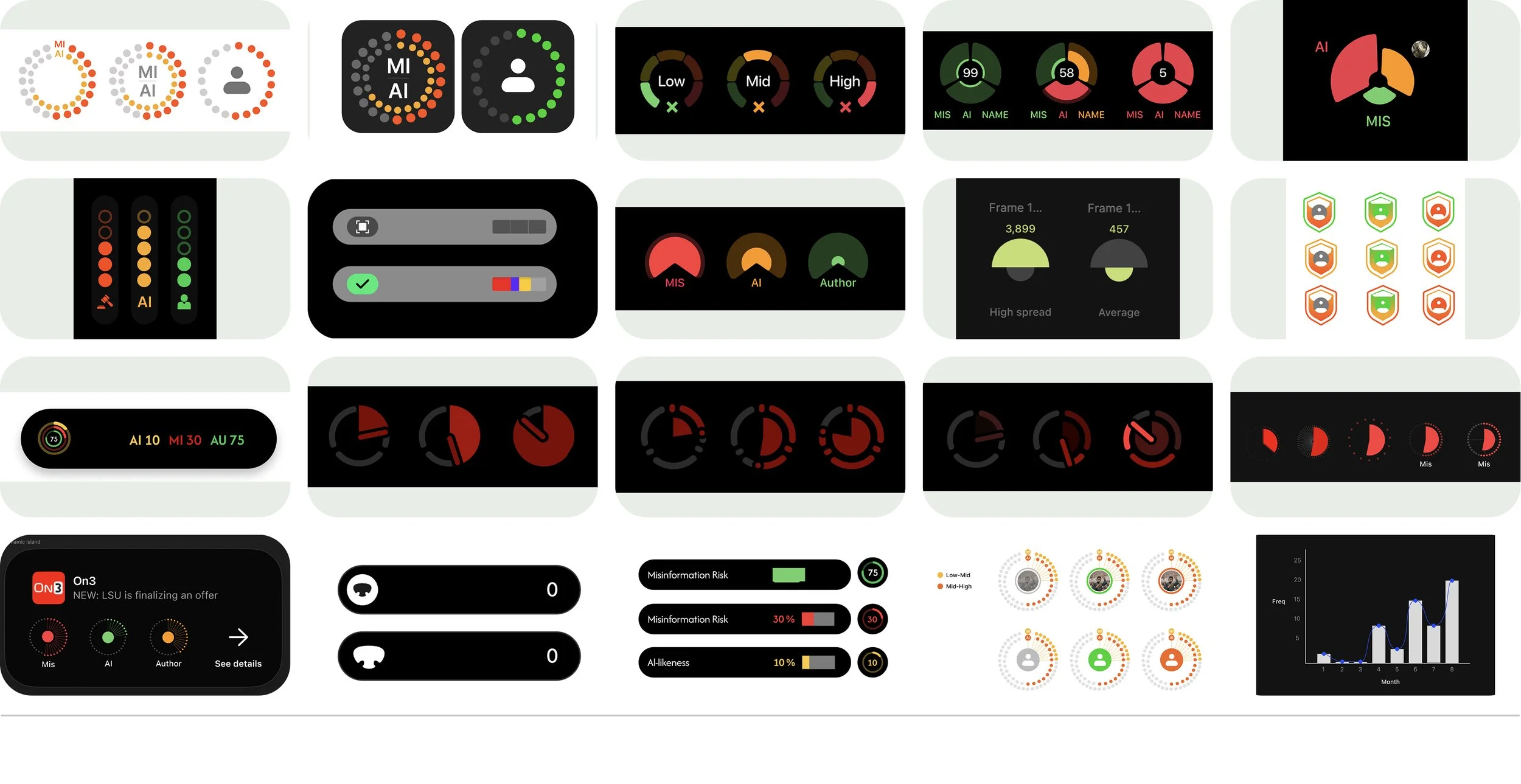
How can we utilize data visualization to pull attention, increase readability, and provide insightful interactions?
These became the foundation for how we shaped the experience.